
Honda CR-V Hybrid vs. Gas: Is the Hybrid Worth the Extra Cost?
Choosing between the CR-V Hybrid and the conventional gasoline version is one of the toughest decisions for SUV buyers today.
On one hand, the hybrid offers exceptional fuel economy and instant torque similar to an EV.
On the other hand, the proven and reliable 1.5L turbo engine offers a lower starting price and a simpler mechanically, which is preferred by many long-term owners.
However, what you need to consider isn’t just the price or the MPG rating on the window sticker. It’s about how well the car fits into your daily life.
Do you often get stuck in city traffic, or do you cruise along the highway? Also, are you worried about having to replace the hybrid battery down the road, or are you more concerned about gas prices that keep rising?
In this guide, I’ll break down real-world performance, comparing fuel costs, maintenance costs, and long-term value for both engine options. By the end of this article, I promise you’ll know exactly which Honda CR-V will be parked in your garage.
Which is better: CR-V Hybrid or Gas?
The Honda CR-V Hybrid is the better choice for city drivers who want maximum fuel efficiency. On the other hand, the CR-V Gas (turbo) is better value for highway commuter or buyer looking for lower starting price, as fuel savings take years to offset its higher upfront cost.
Okay, now let’s take a deeper look at the numbers to see just how much you actually save on gas costs with the CR-V Hybrid compared to the gas-powered model.
Fuel Cost: Real-World Expectations
Let’s start by comparing the fuel economy of the two models. The chart below provides a clear comparison.
| Fuel Economy (MPG) | CR-V Gas (1.5L Turbo) | CR-V Hybrid (2.0L Sport) | Difference |
| City | 28 MPG | 43 MPG | +15 MPG |
| Highway | 34 MPG | 34 MPG | 0 MPG |
| Combined | 30 MPG | 40 MPG | +10 MPG |
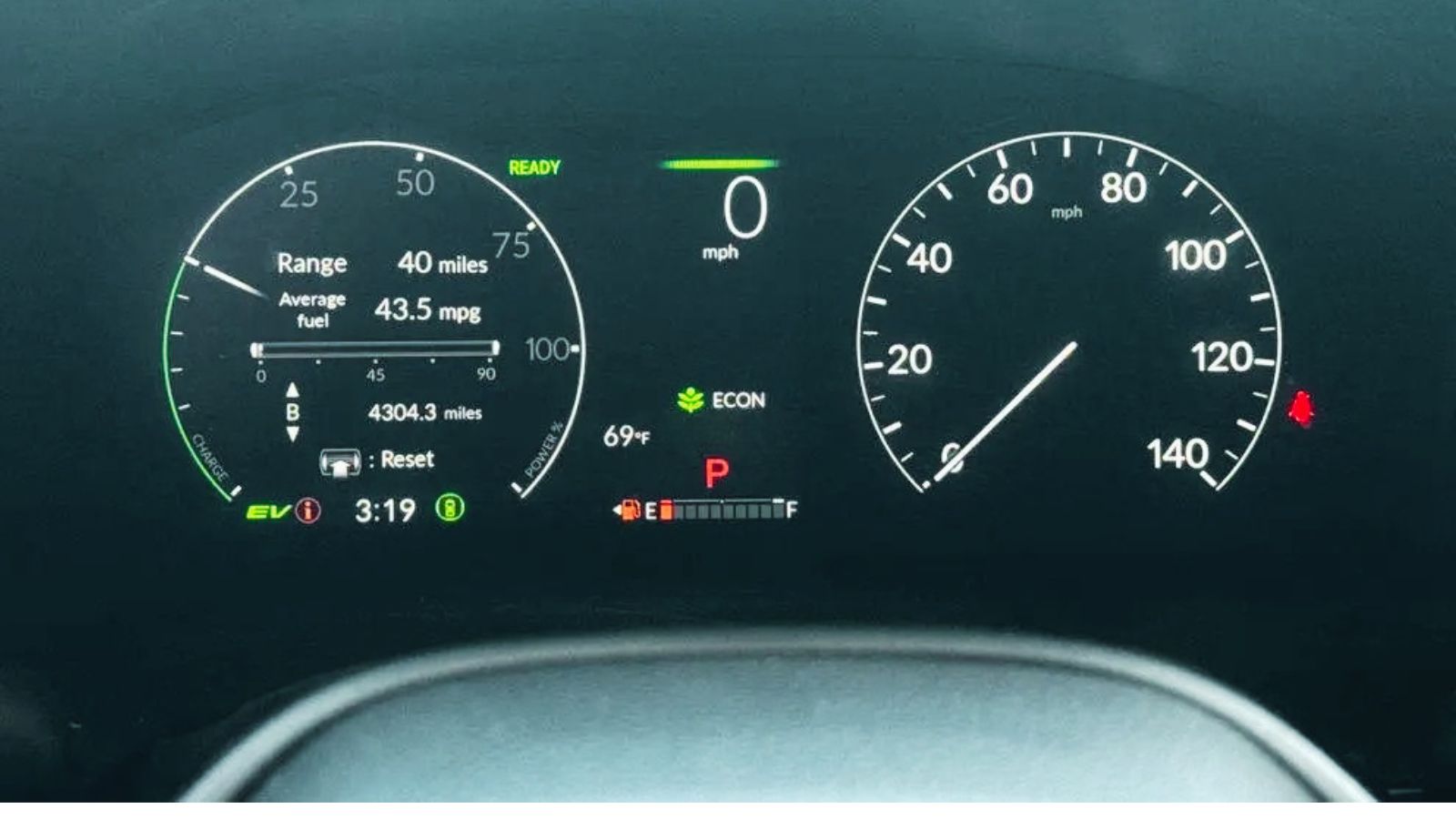
The CR-V Hybrid get up to 15 mpg better fuel economy than the gasoline model in city driving.
This significant advantage stems from the fact that in urban areas, vehicles tend to drive slowly—especially during traffic jams.
When driving slowly, the hybrid vehicle enters EV mode more frequently, during which the gasoline engine does not run at all.
Additionally, during traffic jams, the car frequently stops and starts; this is where the regenerative braking system harvests electricity by converting the kinetic energy from braking into electricity stored in the battery. That’s why the CR-V Hybrid excels in urban driving scenarios.
However, the MPG difference becomes smaller on the highway driving. As you can see, the difference drops to 0 MPG—this is because the CR-V Hybrid relies on the gasoline engine for greater power.
Of course, looking only at the MPG figures isn’t enough; you’ll want to know exactly how much money you can save with the CR-V Hybrid compared with the gasoline model. You’ll also want to know how long it will take for those savings to offset the higher initial cost.
Annual Savings
To calculate how much money you can save on gas in a year, we need to know your average annual mileage. To make it easier, I’ll use data from the Federal Highway Administration, according to insuredbetter.com. U.S. drivers average 13,596 miles annually.
With gas prices around $4.20 per gallon and an average fuel efficiency gain of about 10 mpg, a simple calculation yields the following results:
| Feature | CR-V Gasoline (30 MPG Combined) | CR-V Hybrid (40 MPG Combined) |
| Gallons Used Per Year | 13,596/30 = 453.2 Gallons | 13,596/40= 339.9 Gallons |
| Annual Fuel Cost | 453.2x$4.2 = $1,903.44 | 339.9 x $4.2 = $1,427.58 |
| Yearly Savings | – | $475.86 |
The “Break-Even” Analysis
Saving up to $475 a year sounds tempting, right? But hold on—hybrid models carry a higher upfront cost.
Let’s compare the 2026 Honda CR-V EX-L and Sport-L Hybrid as an example; both have nearly identical features and equipment. To keep things fair, the models we’re comparing both have front-wheel drive and standard paint color.
- 2026 Honda CR-V EX-L: $35,400
- 2026 Honda CR-V Sport-L Hybrid: $38,725
The hybrid model is $3,325 more expensive than the gasoline model. To determine when your investment starts paying for itself, we can use a simple break-even formula:
Break-even period = price difference ($3,325) ÷ annual savings ($475) = 6.98 years.
The Verdict: For the average driver, it takes about 7 years to recover the extra cost of the Hybrid through fuel savings alone.
Note: Prices are based on MSRP and gas prices at the time of writing.
The calculation above is a general estimate; there are several factors that can accelerate the CR-V Hybrid’s payback period.
If you drive mostly in urban areas and frequently find yourself in stop-and-go traffic, the CR-V Hybrid’s fuel efficiency will be even better, which will accelerate the payback period.
Maintenance & Longevity
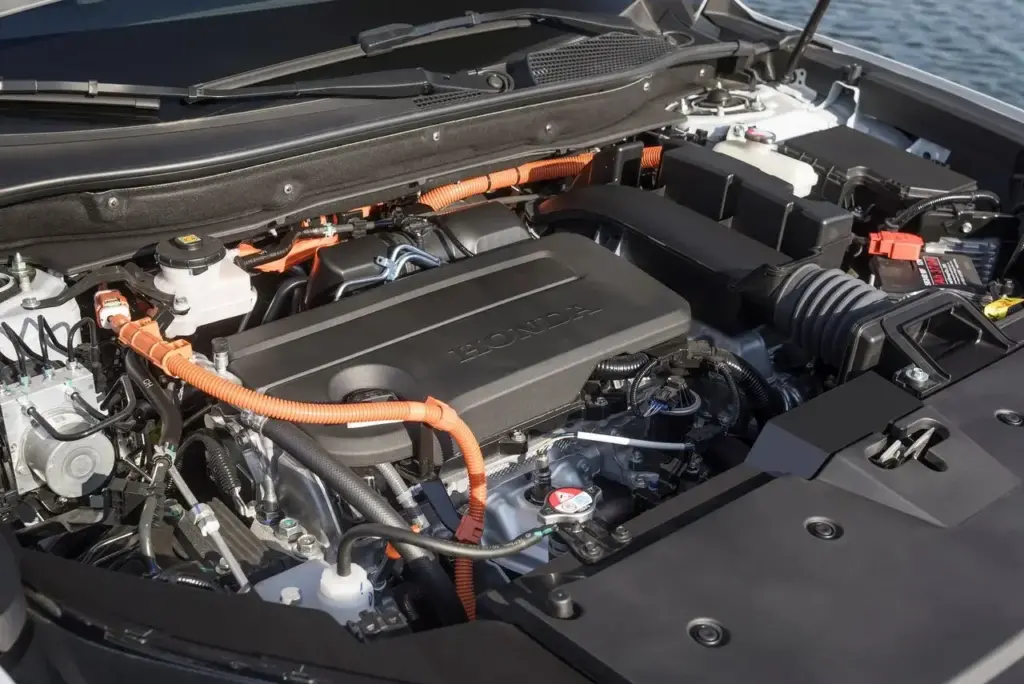
Right now, you might also be thinking that people say hybrid car maintenance is more troublesome and more expensive than that of conventional cars. Is that really true?
Well, in over 10 years of writing about the automotive industry, I’ve met many mechanics and observed hybrid car maintenance firsthand.
In fact, there’s almost no difference between maintaining a hybrid and a gas-powered car. They both follow the standard maintenance schedule. Both require oil changes at the same mileage or time intervals, and the same goes for other maintenance tasks.
However, hybrid cars do have one additional item to ensure: interior cleanliness. This affects the cooling of the high-voltage battery.
When the interior is dirty, sooner or later it will disrupt air circulation in the hybrid battery cooling system. And as my professor once said when I was studying computer science, heat, along with water, is the biggest enemy of electronic components.
So, it’s true that hybrid cars require a little extra care regarding interior cleanliness to ensure longevity. But hey, isn’t it the same for gasoline cars? Cleanliness also makes gasoline cars last much longer.
Another advantage of hybrid cars is that, thanks to the regenerative braking system, the brake pads actually last much longer. This can save you a few hundred dollars on brake pad replacements compared with a gasoline car.
What about the hybrid battery—isn’t that expensive?
True, the cost of a hybrid battery can exceed $3,200—and that doesn’t even include labor costs and taxes. However, the chance of the battery failing prematurely is very low; hybrid batteries are designed to last 150,000 to 200,000 miles.
And if the battery fails early, Honda offers a warranty of up to 100,000 miles or 8 years for the hybrid battery. At the very least, this warranty offers peace of mind
Performance & Powertrain: How Do They Drive?
Fuel economy may be the main factor in deciding which model is more suitable. However, some people choose hybrid models because they offer better performance.
However, that doesn’t seem to apply to the Honda CR-V.
When it comes to performance, the gasoline model powered by a 1.5L turbo engine with 190 hp is just as responsive as the hybrid model.
Yes, it’s 1 second slower in the 0-60 mph test. The hybrid model reaches 60 mph in 8 seconds, while the gasoline model takes 9 seconds.
But in real-world driving, I didn’t notice that one-second difference.
One factor to consider might be that at low speeds and in stop-and-go traffic, the hybrid engine feels smoother thanks to its EV mode.
Interior Space & equipment
The gasoline-powered CR-V has a slight edge in cargo capacity and features.
The hybrid model has a slightly smaller cargo area and lacks the dual-level cargo floor found in the gasoline version. This dual-level cargo floor is a clever feature that proves very handy, allowing you to adjust the floor level to fit whatever you’re loading.
The placement of the hybrid battery under the cargo floor eliminates the dual-level cargo floor, and there’s no longer space for a spare tire.
As a result, the hybrid model does not come with a spare tire, which could be a deal-breaker for people who frequently take long trips. A tire repair kit is provided, but it’s still not as convenient as having a spare tire.
Which Holds Its Value Better?
In general, at least as of the time of this writing, hybrid cars in the United States have a higher resale value than gasoline-powered cars. This is due to the high demand and popularity of these models.
However, it is difficult to say for certain whether this trend will continue in the coming years, but given the trend of global oil prices rising every day, hybrid models will likely remain in demand due to their fuel efficiency.
Which One Should You Choose?
We’ve reached the end of the article, so which Honda CR-V is right for you—hybrid or gasoline? The answer is simple: choose based on your needs.
Choose the CR-V Hybrid if:
- You drive more than 13,000 miles a year.
- Your daily commute is mostly in heavy city traffic.
- You plan to keep the car for more than 7 years.
Choose the CR-V Gasoline if:
- You have a strict budget under $36,000.
- You mostly drive on the highway.
- You often trade in your car within 5 years.
- You prefer a “traditional” engine.
As I mentioned earlier, if you’re the type of person who keeps a car for the long term, then the CR-V Hybrid is a smart move. But if you tend to switch cars every few years, the gasoline-powered CR-V will actually leave you with more money in your wallet.
I hope you’ve already decided which model you’ll be taking home. If you have any questions, or if you’d like to share which model you chose, feel free to leave a comment below!
3 Comments