
Honda CR-V Spark Plugs Guide (Changes, Cost, Etc)
In gasoline-powered engines such as those found in the Honda CR-V, there is a component that plays a crucial role. Without it, the engine would not even start. That is the spark plug!
Well, even though your CR-V engine is so reliable, even the best engine on earth still needs a fresh spark to keep running smoothly.
So, when you notice a dip in fuel economy, or you feel the engine vibrating more roughly, it might be time to check your spark plugs.
In this guide, I’ll walk you through everything you need to know about the spark plugs in your Honda CR-V, when to replace them, how often, the cost, specs, and more.
Let’s dive in!
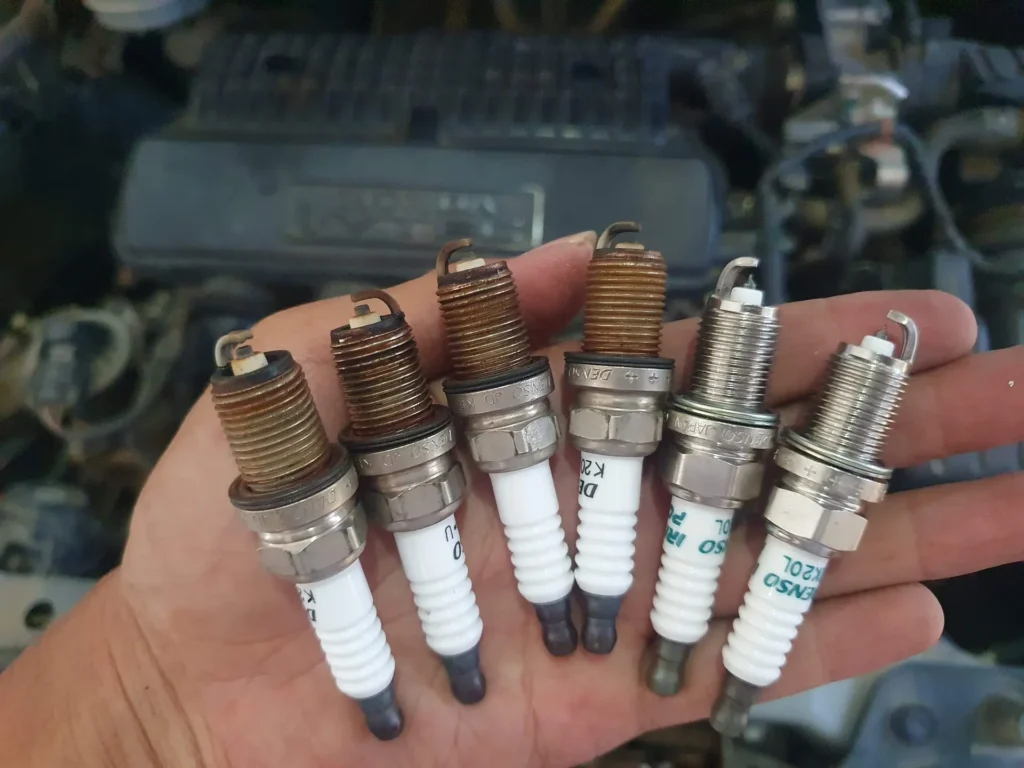
When Should You Change Your Honda CR-V Spark Plugs?
Okay, so the first thing we need to discuss is when do you need to replace the spark plugs?
Well, I assume we all know the function of spark plugs, right?
Alright, just to refresh our memories, let’s talk a little about the function of spark plugs.
So, basically, spark plugs are components that are responsible for sparking the ignition to start combustion in the combustion chamber.
Spark plugs convert high voltage electricity from the ignition coil into sparks to ignite the compressed mixture of fuel and air.
Back to our discussion. When should you replace your spark plugs?
Your Honda CR-V is a modern engine that uses high-quality Iridium spark plugs. This type of spark plug is designed for durability and a longer service life than nickel and platinum spark plugs.
You may have heard information out there saying that Iridium spark plugs can last a very long time, up to 100,000 miles or more.
That’s not entirely true. In fact, not all Iridium spark plugs have that kind of lifespan.
But it’s also not entirely wrong. There are some Iridium spark plugs that are so well-made they can last a long time.
Fortunately, the spark plugs in your Honda CR-V are long-life spark plugs. The Honda CR-V uses NGK Laser Iridium spark plugs, which you can expect to last 80,000 to 120,000 miles under normal usage conditions.
However, personally, I wouldn’t wait that long to replace the spark plugs. For me, 30,000 to 40,000 miles is the ideal mileage for replacing spark plugs.
Pro Tip: If you drive in “severe conditions” (short trips in cold weather or heavy stop-and-go traffic), consider inspecting them every 30,000 miles.
Just to share a quick story…
A few months back, I swapped out the spark plugs in my car. The old ones had only done about 25,000 miles, but I noticed the engine felt less responsive and fuel economy wasn’t great.
So I picked up a set of Denso Iridium plugs and replaced them myself at home. Right away, the car felt livelier, and fuel efficiency improved more than I expected.
From that experience, I realized mileage alone doesn’t always tell you when it’s time to change spark plugs. Paying attention to how your engine runs—things like responsiveness and fuel consumption—can be an even better indicator.
Bad Spark Plugs Symptoms

Spark plugs are made to last, but they are not invincible. Over time, wear and carbon buildup will contribute to spark plug failure.
Don’t wait until your car won’t start. Instead, watch out for these common signs that it might be time to check your CR-V’s spark plugs:
- Rough Idling: You might notice the engine vibrating more than usual. Sure, that symptom can also point to worn engine mounts, but if spark plugs are the culprit, you’ll often hear extra noises too—like pinging, rattling, or even knock-like sounds coming from the engine.
- Difficulty Starting: The engine cranks longer than usual before firing up. Sometimes, the engine also stalls shortly after being started.
- Engine Misfiring: This symptom usually shows up when spark plugs are starting to wear out. The engine may vibrate, jerk, or hesitate while you’re driving—and in many cases, the check engine light will pop on right away.
- Poor Fuel Economy: When the spark plugs are no longer in good condition, combustion in the combustion chamber becomes less efficient, which will result in reduced fuel economy.
Best Spark Plugs for Honda CR-V
You’re free to use any brand of spark plugs as long as they meet the right technical specs.
The most important things to check are the thread size and thread reach. If the reach doesn’t match your engine’s specs, it can actually cause serious damage.
Material matters too. If your CR-V came from the factory with Iridium spark plugs, don’t downgrade to nickel or platinum—that would be a step backward in performance and durability.
On the other hand, if the spark plugs used from the factory are nickel or platinum, then you are free to upgrade to iridium spark plugs.
Here’s a clear breakdown of the Honda CR-V spark plug specifications and recommendations across model years:
| Model Year | Engine | Thread Size | Thread Reach | Recommended Plug |
|---|---|---|---|---|
| 2026 | 2.0L Hybrid 1.5L Turbo | 12mm 12mm | 26.5mm 26.5mm | NGK DILZKAR7G11Y NGK DILKAR8P8SY |
| 2025 | 2.0L Hybrid 1.5L Turbo | 12mm 12mm | 26.5mm 26.5mm | NGK DILZKAR7G11Y NGK DILKAR8P8SY |
| 2024 | 2.0L Hybrid 1.5L Turbo | 12mm 12mm | 26.5mm 26.5mm | NGK DILZKAR7G11Y NGK DILKAR8P8SY |
| 2023 | 2.0L Hybrid 1.5L Turbo | 12mm 12mm | 26.5mm 26.5mm | NGK DILZKAR7G11Y NGK DILKAR8P8SY |
| 2022 | 2.0L Hybrid 1.5L Turbo | 12mm 12mm | 26.5mm 26.5mm | NGK DILZKAR7D11S NGK ILZKAR8J8SY |
| 2021 | 2.0L Hybrid 1.5L Turbo | 12mm 12mm | 26.5mm 26.5mm | NGK DILZKAR7D11S NGK ILZKAR8J8SY |
| 2020 | 2.0L Hybrid 1.5L Turbo | 12mm 12mm | 26.5mm 26.5mm | NGK DILZKAR7D11S NGK ILZKAR8J8SY |
| 2019 | 2.4L 1.5L Turbo | 12mm 12mm | 26.5mm 26.5mm | NGK DILKAR7H11GS NGK ILZKAR8J8SY |
| 2018 | 2.4L 1.5L Turbo | 12mm 12mm | 26.5mm 26.5mm | NGK DILKAR7H11GS NGK ILZKAR8J8SY |
| 2017 | 2.4L 1.5L Turbo | 12mm 12mm | 26.5mm 26.5mm | NGK DILKAR7H11GS NGK ILZKAR8J8SY |
| 2016 | 2.4L | 12mm | 26.5mm | NGK DILKAR7H11GS |
| 2015 | 2.4L | 12mm | 26.5mm | NGK DILKAR7H11GS |
| 2014 | 2.4L | 12mm | 26.5mm | NGK ILZKR7B-11S |
| 2013 | 2.4L | 12mm | 26.5mm | NGK ILZKR7B-11S |
| 2012 | 2.4L | 12mm | 26.5mm | NGK ILZKR7B-11S |
| 2011 | 2.4L | 12mm | 26.5mm | NGK ILZKR7B-11S |
| 2010 | 2.4L | 12mm | 26.5mm | NGK ILZKR7B-11S |
| 2009 | 2.4L | 14mm | 19mm | NGK IZFR6K11 |
| 2008 | 2.4L | 14mm | 19mm | NGK IZFR6K11 |
| 2007 | 2.4L | 14mm | 19mm | NGK IZFR6K11 |
| 2006 | 2.4L | 14mm | 19mm | NGK IZFR6K11 |
| 2005 | 2.4L | 14mm | 19mm | NGK IZFR6K11 |
| 2004 | 2.4L | 14mm | 19mm | NGK IZFR6K11 |
| 2003 | 2.4L | 14mm | 19mm | NGK IZFR6K11 |
| 2002 | 2.4L | 14mm | 19mm | NGK ZFR6F-11 |
| 2001 | 2.4L | 14mm | 19mm | NGK ZFR6F-11 |
| 2000 | 2.4L | 14mm | 19mm | NGK ZFR6F-11 |
From the chart above, you can see the spark plug specifications required for each Honda CR-V model year.
So, you are free to choose any brand you like, but so far, I have never used spark plugs from brands other than NGK, Denso, and Bosch.
Spark Plug Replacement Cost

How much should you set aside? Costs vary based on whether you DIY or visit a dealership.
- DIY Cost: $60 – $125. You only pay for the set of 4 premium Iridium plugs (approx. $15–$30 each).
- Professional Shop/Dealer: $169– $245. This includes parts plus labor cost.
DIY Guide: How to Replace Your Spark Plugs
If you have the basic tools at home and you are confident enough to do it, changing spark plugs is a simple 30-minute job.
Tools Needed:
- 3/8″ Drive Ratchet
- 10mm socket
- 5/8″ or 14mm “Thin Wall” spark plug socket (check your specific model year)
Steps:
- Remove the Air Box/Resonator Chamber: For the latest CR-V model (starting in 2017), you need to open the air box first. The spark plugs are located underneath the air box assembly.
- Disconnect the Ignition Coils: Unplug the electrical connectors from each of the four ignition coils.
- Remove the Ignition Coils: Use a 10mm socket to loosen the coil bolt, then pull the coil straight up and out.
- Remove the Old Spark Plugs: Use a 14mm or 16mm socket (depending on your CR-V model) to loosen and remove the old spark plug.
- Install the New Spark Plugs:Install the new spark plug slowly, using your hand to tighten it for precision. Do not tighten it too much, just enough to keep the spark plug in place. If you have a torque wrench, set it to around 13-16 lb-ft.
- Reinstall Ignition Coils and Reassemble the Air Box.
- Finish!
Conclusion
Changing the spark plugs in your Honda CR-V is one of the easiest ways to restore performance and improve fuel economy.
The steps are easy, and the cost is quite affordable. With excellent spark plugs, you ensure efficient combustion, so engine performance is maintained.
The specification table I have provided above will certainly make it easier for you when shopping for new spark plugs for your CR-V.
If you have further questions or want to share your experiences with spark plugs, feel free to drop a comment below!