
2026 CR-V TrailSport Vs EX-L: Is the $3,000 Gap worth it?
You’ve decided on a CR-V. Good choice. Now you’re stuck between two trims that look nothing alike.
You spotted a TrailSport in the lot. Orange badging, amber lighting, that green paint you can’t get on anything else. It looked ready for something.
Then the salesperson pushed the EX-L. It has leather seats and the same features as the TrailSport, with a significantly lower price.
Good news: this decision is simpler than it feels standing on the lot. Once you know what’s actually different between them, it’s an easy call.
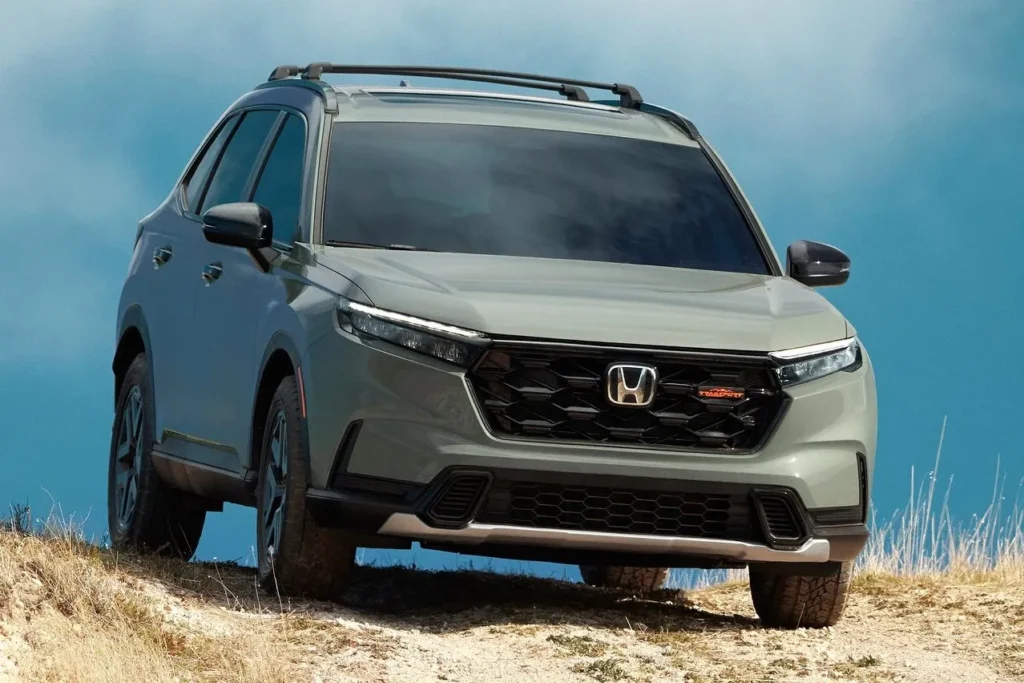 Honda CR-V TrailSport
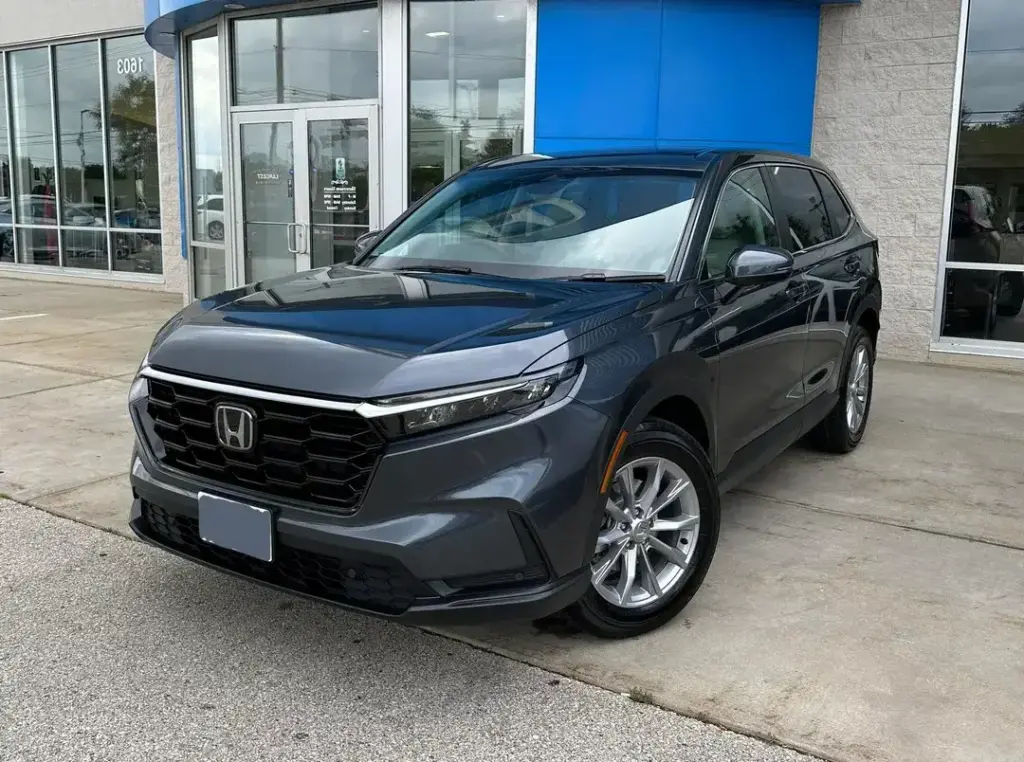 Honda CR-V EX-L
First, Settle Gas vs Hybrid
Before comparing trims, there’s a bigger question underneath all of this.
EX-L runs the regular 1.5L turbo gas engine. TrailSport only comes as a hybrid — there’s no gas version of it.
That single fact drives almost everything else about the price gap, which I’ll get to in a second.
If you haven’t decided whether hybrid makes sense for how you drive, this breaks it down — worth five minutes before you fall in love with either trim.
They’re More Alike Than the Price Tag Suggests
Here’s the part most people miss: strip away the engine, and these two trims are close cousins, not distant relatives.
Both get the same 18-inch wheel size, the same 320-watt 8-speaker audio, the same 10.2-inch digital gauge cluster, and the full Honda Sensing safety suite.
Both come with a power tailgate, wireless CarPlay and Android Auto, wireless phone charging, and the leather-wrapped steering wheel.
So why does TrailSport cost more? Almost entirely because of the hybrid system underneath it, not because it’s loaded with extra gear.
The 2026 gap runs $3,170 versus an EX-L FWD, or $1,900 once you compare it against an EX-L in AWD — the more apples-to-apples match since TrailSport is AWD-only. For 2027, that’s $3,400 and $1,900 respectively.
I’ll be honest about the fuel math here.
Yes, the hybrid system is genuinely more efficient. But that upfront premium isn’t nothing, and it takes real time behind the wheel before fuel savings actually close the gap. If you’re not putting on serious annual mileage, you might trade in before you ever break even.
Where EX-L Actually Wins

This surprises people, but the cheaper trim beats TrailSport on a few real comfort items.
EX-L gets leather-trimmed seats. TrailSport doesn’t — you’re in cloth despite paying more overall.
EX-L also has two-position driver’s seat memory, a four-way power passenger seat, and an auto-dimming rearview mirror. TrailSport skips all three. Same story with auto up/down power windows on all four windows — EX-L has it, TrailSport only auto up/down on the driver’s window.
EX-L also tows more, 1,500 lbs versus TrailSport’s 1,000 lbs, and carries a bit more cargo space since it doesn’t have hybrid components eating into the floor.
Put simply: EX-L is the more “premium-feeling” trim, full stop. Nothing about TrailSport’s interior tries to compete with that.
Where TrailSport Wins
TrailSport isn’t just a badge, though. It has a heated steering wheel, which EX-L doesn’t offer at all.
Amber ambient lighting plus lit door handles and footwells, versus EX-L’s plain white glow.
The bigger deal is the tires.
TrailSport rides on real all-terrain rubber, not the all-season tires EX-L uses. And the paint — Ash Green Metallic is TrailSport-exclusive.
TrailSport also picks up a few tech items that matter to some buyers and not at all to others.
It comes with HondaLink Subscription Services, which unlocks things like remote start from your phone. EX-L doesn’t get that subscription tier at all.
TrailSport also includes Honda Trail Experience™ (HTX™), exclusive to this trim, heated steering wheel, and Wi-Fi Hotspot capability — another thing EX-L simply lacks.
None of these are dealbreakers on their own. But if remote start or in-car Wi-Fi is something you’d actually use every week, it’s worth weighing against everything EX-L does better on the comfort side.
But here’s my honest read after going through every line of this spec sheet: cosmetics and tires are genuinely the whole story.
Strip those two things away and TrailSport doesn’t out-feature EX-L anywhere — it loses on several comfort items, as I just laid out above. Even AutoGuide’s own first-drive team landed on the same conclusion, calling TrailSport “more of a visual package than a real jump in off-road prowess.“
My Actual Take
So here’s where I land, and it’s a bit contrarian: I wouldn’t buy the TrailSport.
If the only real difference is off-road styling and a set of all-terrain tires, why not just buy the EX-L instead?
Pick FWD or AWD based on where you actually live and how you drive it — this covers that decision properly — and take that $1,900 to $3,400 price difference and spend it yourself.
A set of aftermarket wheels (which, honestly, look better than the stock TrailSport wheels to my eye) plus a proper set of AT or even MT tires gets you the same off-road-ready look and the same functional grip. Often for less money than the TrailSport premium costs you.
And you get to choose the exact tire compound for where you actually drive, instead of whatever Honda picked off the shelf.
You end up with a CR-V that does everything TrailSport does, keeps EX-L’s leather and comfort features, and probably still has cash left over. The badge doesn’t do anything the tires and wheels can’t do on their own.
So, which one will you choose to park in your garage? Whatever you choose, you can’t go wrong with either one—both the EX-L and the TrailSport are CR-Vs, and they’re great no matter the trim level. Congratulations—you’ve chosen an amazing family SUV.
If you have any further questions, feel free to reach out to me via the comments section or the contact page.