
Used CR-V Buying Guide: Best Years to Buy & to Avoid (2026)
Honestly, I’ve never bought a new car in my life. Every vehicle I’ve owned has been used — and I’d do it the same way again.
To me, used cars are simply better value for money. Someone else takes the depreciation hit in year one, and you get a proven, real-world-tested machine at a fraction of the original price.
I also have enough mechanical background to inspect a used car properly before buying — checking the things that matter, not just the obvious stuff.
Friends and neighbors regularly ask me to come along when they’re looking at a used car, and so far, nothing I’ve bought or recommended has turned out to be a disappointment.
So when I put together a used CR-V guide, it’s not from a theoretical standpoint. It’s the same thinking I’d apply if I were standing in someone’s driveway with a flashlight.
The CR-V has a strong reputation for reliability — and mostly, it deserves it. But “mostly” is doing a lot of work in that sentence.
Buy the wrong year, and you could end up with an oil dilution nightmare, a CVT that shudders at every stoplight, or an AC system that self-destructs and takes the entire refrigerant circuit with it. This guide is blunt about which years to avoid and why.
Short on time? Here’s the quick version:
Best years to buy: 2013, 2014, 2016, 2019, 2020, 2021, 2022
Proceed with caution: 2011, 2012, 2023–2024
Years to avoid: 2007–2009, 2015, 2017, 2018
My personal pick for the best value on the used market right now: a 2020–2022 CR-V gas (1.5T turbo) in good condition with documented service history. Read on for the full reasoning.
Known Issues and Recalls by Generation
Gen 1 (1997–2001)
These are old cars now, and age is the main enemy — underbody rust, oil leaks, aging power steering components, and weak AC performance. Better suited for enthusiasts than daily drivers at this point.
Gen 2 (2002–2006)
| Year | Key Issues |
|---|---|
| 2002–2004 | AC compressor failure (metal debris contaminating entire system, $2,500+ repair); AWD rear differential fluid issues; Takata airbag recall |
| 2005–2006 | Complaint volumes drop significantly; most reliable Gen 2 years |
Gen 3 (2007–2011)
| Year | Key Issues | NHTSA Recalls |
|---|---|---|
| 2007–2009 | Unintended acceleration (repairs up to $5,000); steering rack failure; AC compressor failures; electrical issues; laggy head unit, Bluetooth disconnecting | Multiple |
| 2010 | Significantly cleaner than 2007–2009 | Few |
| 2011 | Late-cycle oil consumption spike; Takata airbag recall; rear frame corrosion recall (issued 2023) | 13 |
Gen 4 (2012–2016)
| Year | Key Issues | NHTSA Recalls |
|---|---|---|
| 2012 | Front strut top bearing failures; parasitic battery drain (every 2–4 days); brake-shift interlock recall | 3 |
| 2013–2014 | Minor electrical quirks only | Few |
| 2015 | CVT shudder and failures (up to $6,000); idle vibration class-action lawsuit; ABS triggering randomly on highway; battery drain | 3 |
| 2016 | Most 2015 issues resolved via updates | Few |
Gen 5 (2017–2022)
| Year | Key Issues | NHTSA Recalls |
|---|---|---|
| 2017 | Oil dilution — worst year; infotainment freezing/blanking | 7 |
| 2018 | Oil dilution continues; official fix not issued until late 2018; infotainment issues | 5 |
| 2019 | Oil dilution improving post-fix; AC refrigerant leaks (O-ring failures); airbag owner’s manual recall | 7 |
| 2020 | Minor infotainment complaints; Hybrid launches; 12V battery cable recall on early Hybrid units (fire risk) | 9 |
| 2021 | Infotainment randomly switching inputs; passenger seat weight sensor recall (airbag suppression failure) | 5 |
| 2022 | Bluetooth pairing failures; steering rack not returning to center; fuel gauge sensor recall; sticky steering gearbox | 6 |
Gen 6 (2023–2026)
| Year | Key Issues | NHTSA Recalls |
|---|---|---|
| 2023 | CarPlay issues on Hybrid Touring (some needed full unit replacement); HV battery module recall (spark risk); fuel pump crack/leak recall | 7 |
| 2024 | CarPlay/infotainment complaints; steering gearbox recall (excessive friction); TIN date code recall | 4 |
| 2025 | AC refrigerant leaks; power steering recall; fuel feed hose recall on Hybrid (fuel leak risk) | 5 |
| 2026 | Fit-and-finish complaints (panel gaps, mold lines on interior plastic); tire repair kit recall on Hybrid | None |
Which Should You Buy?
I’ll be direct: if budget allows, I’d head straight for the Gen 5 gas — specifically 2020 –2021.
Here’s my thinking. The Gen 5 hits a sweet spot that no other generation currently matches on the used market: super comfortable to live with daily, proven reliable once the oil dilution issues were resolved, and priced at a point that makes sense. I’m specifically talking about the 1.5L turbo gas models — not the Hybrid.
I’d stay away from the Gen 5 Hybrid personally. The high-voltage battery on a used example is an unknown — you have no visibility into how many charge cycles it’s been through, whether it’s degrading, or how it’s been treated.
The powertrain warranty is likely expired or close to it. And Gen 5 Hybrid prices on the used market are still higher than I’d want to pay for that uncertainty.
Worth noting too: the Hybrid is also limited to 1,000 lbs towing capacity vs. 1,500 lbs on the gas version. The gas 1.5T at this mileage range, properly maintained, is a much more predictable ownership proposition.
On pricing: A 2019 CR-V gas currently sits around $18,000–$20,000 depending on trim and mileage — genuinely good value for what you’re getting.
If you can stretch slightly, the 2020 is worth the extra spend. It received a facelift that year with a cleaner interior, updated infotainment, and Honda Sensing improvements.
A 2020 or 2021 EX in decent shape can be found around $21,000 — still a sweet spot before prices climb toward Gen 6 territory.
The one thing I’d accept as a compromise on Gen 5 — and this frustrates me about these cars — is the head unit. It’s slow. It lags on startup, hesitates on inputs, and makes the car feel older than it is.
The good news: if you have around $700 in the budget after purchase, a modern Android-based aftermarket head unit is a legitimate fix.
These units run smoothly, support wireless Apple CarPlay natively, and installation on the CR-V is straightforward. It’s a mod that transforms the daily experience.
If your budget is tighter, the 2013, 2014, and 2016 CR-V is where I’d look. It comes with the 2.4L NA engine. It straightforward, proven, and genuinely reliable well past 200,000 miles.
It’s a little thirstier on fuel than the 1.5T that replaced it, and the suspension is tuned slightly sportier than Gen 5, but at the end of the day it’s still a CR-V — comfortable, practical, and with a reputation that holds up.
Current used market pricing sits around $17,000 depending on trim and whether it’s FWD or AWD. For that money, it’s hard to argue with.
Years to avoid in my book: 2007–2009, 2015, and 2017–2018. These aren’t minor-issue years — they’re years where the problems were structural, expensive, or in some cases dangerous. The savings on purchase price rarely compensate for what you might walk into.
What to Check When Inspecting a Used CR-V
This is the part most buying guides skip — or cover so generically it’s useless.
Here’s what I actually do when I’m standing in front of a used CR-V, whether I’m buying for myself or helping a friend.
Documents first — before you even look at the car
Verify the paperwork is complete and legitimate before wasting time on anything else. Title, registration, service records — all of it.
This isn’t just bureaucracy. A car with questionable documentation could be stolen property, and you don’t want to find that out after you’ve handed over your money. This step is non-negotiable.
Check for accident history
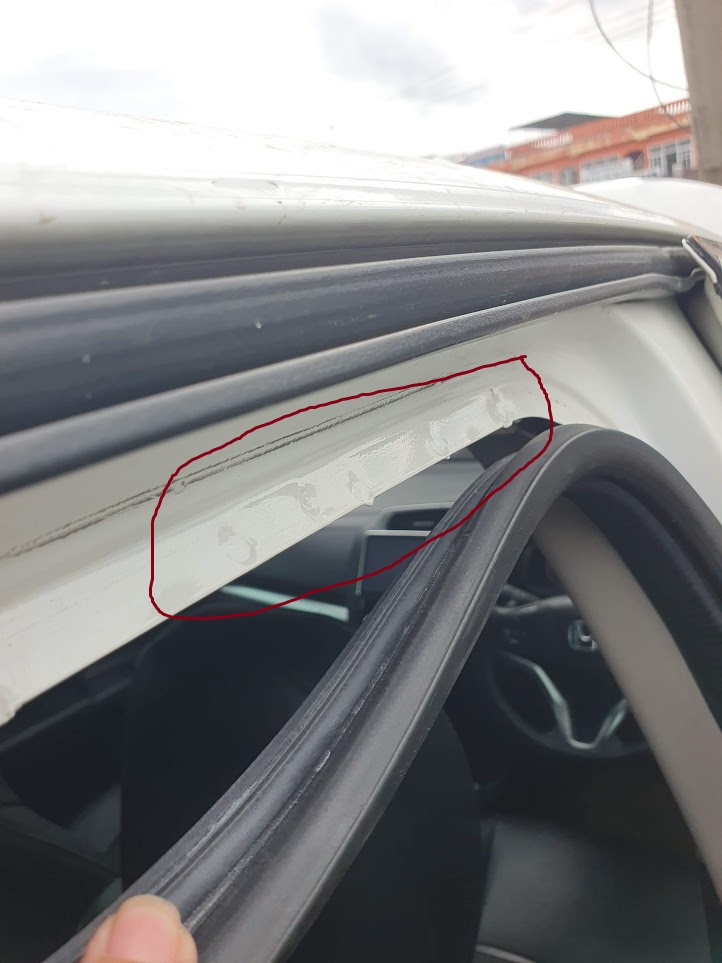
Walk around the entire car slowly and look at panel gaps, paint color consistency across panels, and any signs of body filler or mismatched texture.
Repaired panels after a collision often look slightly off — a different sheen, uneven gaps, or overspray near rubber seals. A minor fender bender is one thing.
A car that’s been through a serious collision and patched back together is a different story. Run a Carfax or AutoCheck report too — but don’t rely on it alone, since not all accidents get reported.
Oil cap and service history
Ask for the service records — specifically oil change history. A high-mileage CR-V that’s been serviced religiously is a far better buy than a low-mileage one with gaps in the records.
Then pop the oil cap and look inside the engine. If the internals look clean and shiny, that’s a good sign — the oil has been changed regularly and the engine is well-lubricated.
If you see dark sludge, caked-on gunk, or buildup around the cap, close it and walk away. That engine has been neglected, and neglected engines have expensive futures.
On 1.5T models (2017–2022), also pull the dipstick and smell the oil — it should smell like oil, not gasoline.
Check under the engine for leaks.
Get down and look at the ground under where the car is parked. A small, bright flashlight would be very useful at this time.
Any fresh oil spots on the pavement are a flag. Then look up at the underside of the engine — any wet, oily areas around the gaskets, oil pan, or valve cover tell you something is seeping.
A small seep is manageable. Anything that looks like it’s been leaking for a while — with dirt and grime stuck to the oily areas — means the engine may need significant work. Don’t buy a car that needs an overhaul.
Check the undercarriage for rust
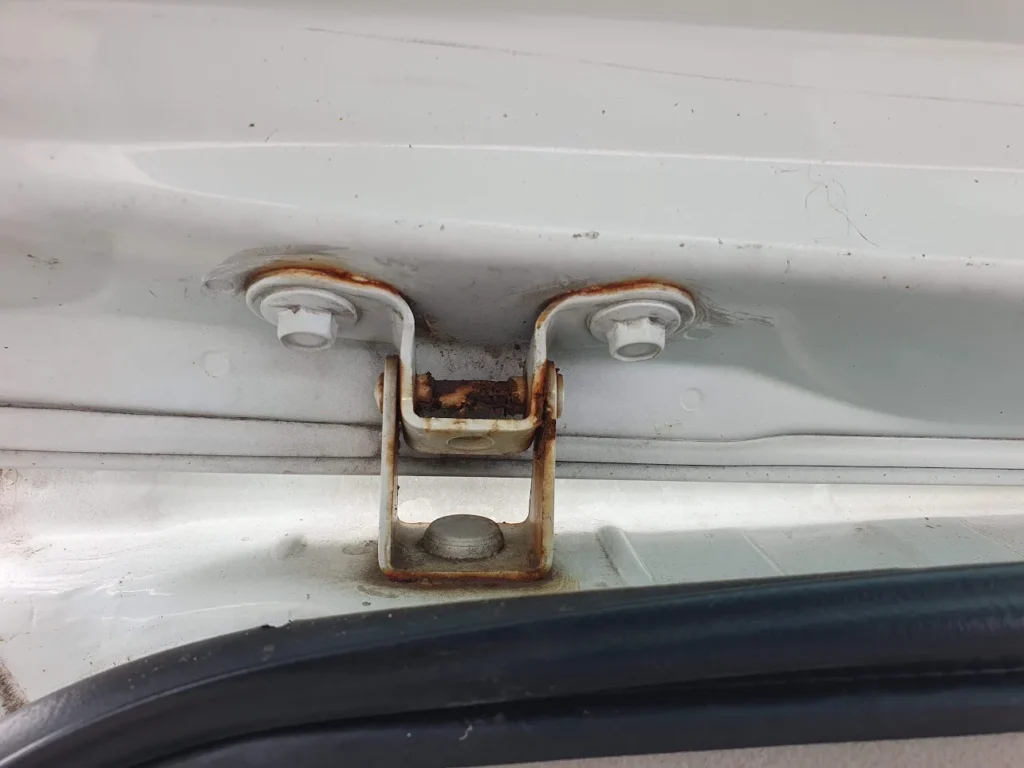
Get under the car and look at the frame rails, rear subframe, and floor pans. This is especially important on CR-Vs used near the coast or in states that use road salt in winter.
Gen 3 models (2007–2011) had a documented rear subframe corrosion recall — on the worst examples, the rear wheels could collapse inward.
Surface rust on exposed metal is normal on an older car. Rust that’s eating through structural components is a deal-breaker.
Suspension and steering — test drive it hard enough to know.
During the test drive, hit some bumps and uneven pavement and listen for clunking or knocking from the suspension.
Take a corner at a reasonable speed and feel whether the car tracks confidently or wanders.
Turn the steering wheel lock to lock in a parking lot — it should feel smooth with no grinding or resistance.
Any looseness, play, or unusual noise in the steering is worth investigating before committing.
Check all electrical functions and the AC
This sounds basic, but run through everything: every window, every door lock, headlights, interior lights, both directions of every mirror adjuster.
For the AC, run it on maximum cold for at least 10 minutes — a system with a refrigerant leak will blow cool at first and then gradually warm up.
On Gen 2 and Gen 3 early models, AC compressor failure is common and expensive. Test it properly, not just for 30 seconds.
Sunroof — check it carefully if equipped
Open and close it fully. Listen for any grinding or hesitation in the motor.
Then — and this part matters — look at the headliner around the sunroof opening for any water staining or discoloration.
A sunroof that’s leaked, even once, can cause ongoing moisture problems and mold inside the headliner. If you see staining, ask about it directly.
Avoid heavily modified cars
This one is personal preference, but I always avoid cars with significant modifications — lowered suspension, oversized wheels, aftermarket exhaust, heavy audio installs.
Not because modifications are inherently bad, but because owners who modify their cars heavily often prioritize looks over mechanical upkeep.
A stock CR-V, well-maintained and clean, tells you more about the previous owner’s priorities than almost anything else. The kind of person who keeps a car stock usually keeps it serviced too.
In your quick version near the top, you didn’t include the 2013 and 2014 years. How would you categorize these years?
Good catch, I totally missed those two. I’d call 2013 and 2014 good buys, especially if you’re on a budget. They still have the 2.4 with a regular automatic, so no CVT drama like the 2015.
Just make sure the AC blows cold for a good while, since compressors are the usual weak spot. And at this age, condition matters more than the year. I’ll fix the list, thanks!